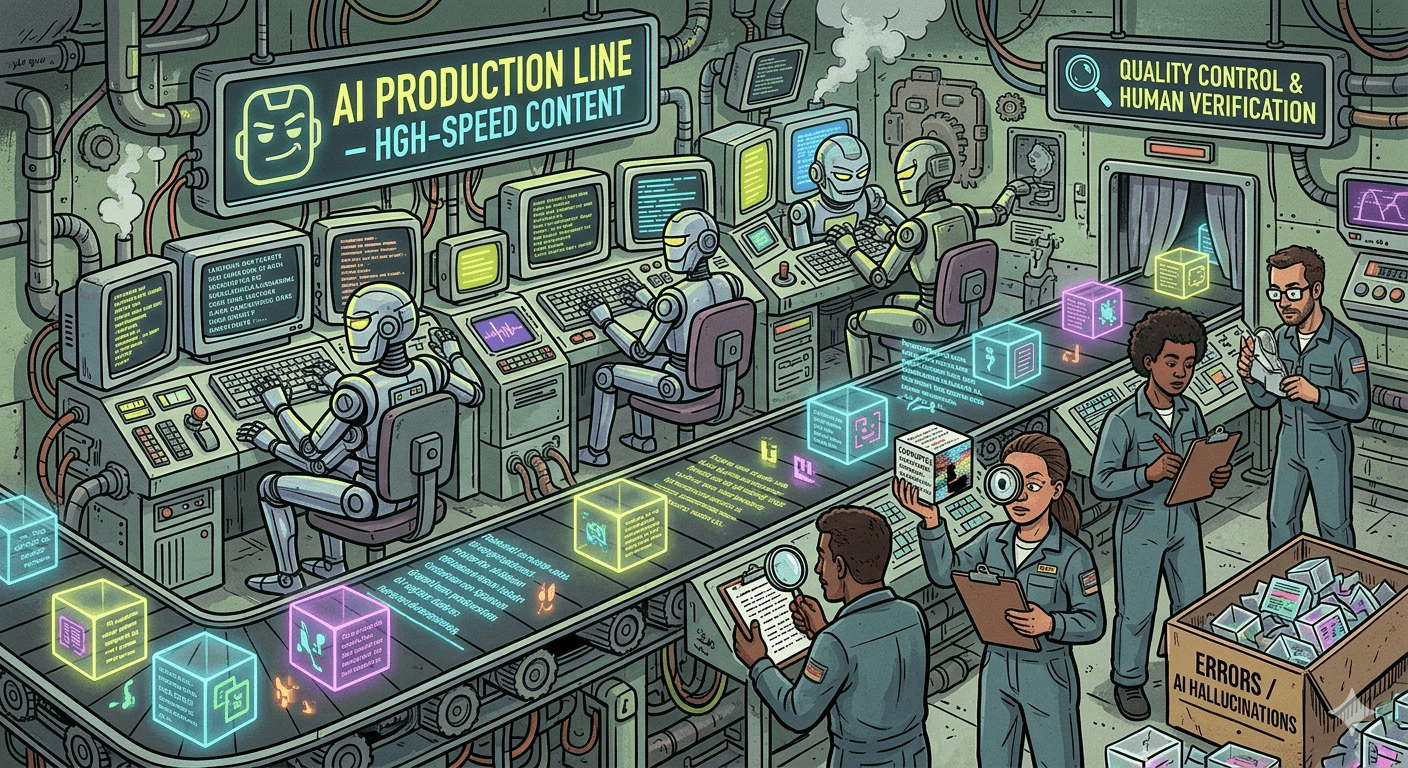
Sometimes, I feel less like a professional creator and more like a high-stakes Quality Control (QC) inspector for a brilliant but pathologically overconfident intern.
Due to my current work, I spend a massive amount of time interacting with Large Language Models (LLMs). I'll admit, the honeymoon phase was intoxicating. When you first start using a new model, it's nothing short of a big shock — the sheer speed and scale of its output are mind-blowing.
But that high expectation is a double-edged sword; it is almost always followed by an equally high level of frustration. Then come the "hallucinations." The model gets the numbers wrong, misses the nuance of a prompt, or produces something visually absurd. ┓( ´∀` )┏
In those moments, the reality hits: I haven't just gained a "colleague." I've gained a massive new workload of oversight. We are witnessing a fundamental shift in the human role: we have transitioned from being primary Producers to becoming full-time Quality Inspectors. This role is far more taxing than it appears, for three core reasons:
- The Asymmetry of Error: AI makes mistakes at zero cost. But for me, the cost of publishing those errors is real — the erosion of my professional credibility. The AI "dreams" the nonsense, but I have to answer for it.
- The Trap of "Perfect and Confidence Tone": The most dangerous part isn't the error itself, but the confident tone the AI uses to package it. It presents hallucinations with such poise that I must remain in a state of hyper-vigilance.
- The Signal-to-Noise Crisis: My daily life has become a struggle to salvage value from a flood of fragments — desperately injecting human logic, aesthetics, and truth back into a sea of automated noise.
It begs the question: If our creative energy is being drained by auditing AI outputs, is this actually a leap in productivity? Or have we just traded the labor of doing for the exhaustion of correcting?
Disclaimer: This article was originally conceived by the author (acting as Chief Quality Inspector) and polished with the assistance of Gemini. After several rounds of wrestling with AI hallucinations to ensure the tone met human logical standards, this draft has finally passed my final inspection.